
Lumus: Psychic & Tarot Reading
PsychicsLifestyle
4.4794.00 Reviews
- Version
- 1.1.386
- Installs
- 500.00K
- Age Rating
- Everyone
Screenshots
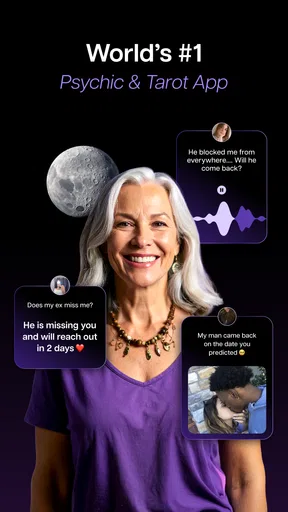
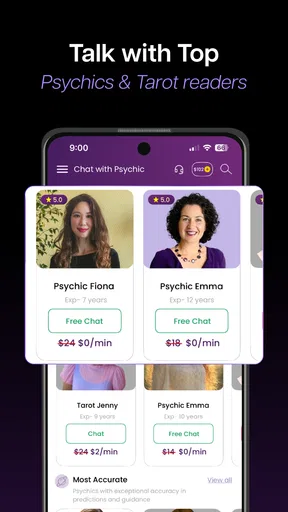
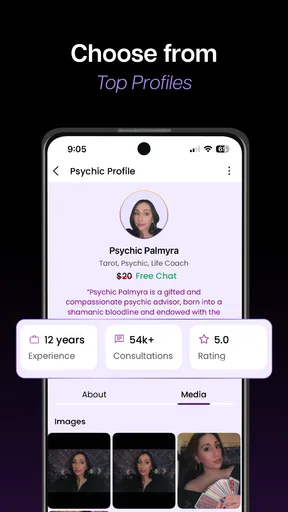
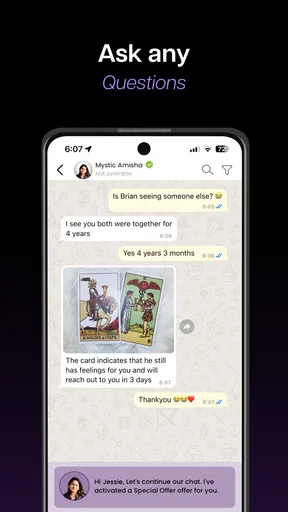
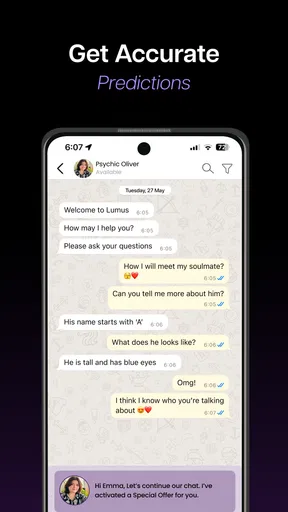

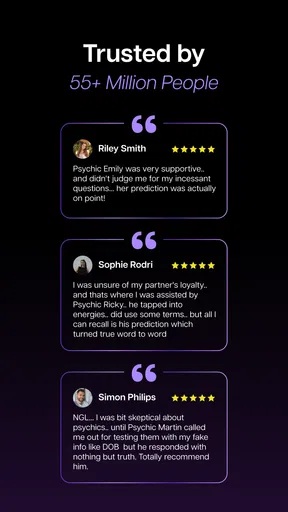
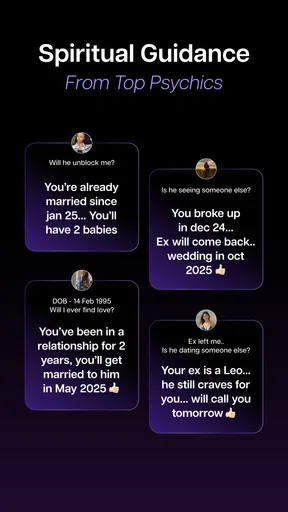
Our Review of Lumus: Psychic & Tarot Reading
 Analysis by Appyee
I approached Lumus: Psychic & Tarot Reading as a lifestyle app for moments when I wanted a quick spiritual perspective rather than a long, formal consultation. Its central idea is simple: connect with a psychic or tarot reader through chat and ask for guidance in the moment. That makes it feel more immediate than arranging an appointment, while still leaving room for a personal exchange instead of a completely automated horoscope.
The app is free to install, carries an Everyone content rating, and comes from the developer Psychics. It has built a noticeable audience, with over 100 thousand installs and a 4.4 average from around 3.5 thousand ratings. Those figures suggest that the basic chat-first approach is easy for many people to understand, but they do not replace the more important question: does it suit the way you actually want to use spiritual guidance?
How Lumus feels when you need an answer quickly
I find Lumus most useful when a question is specific enough to discuss but not so urgent that I need professional help or a definite answer. In this section, I’ll look at what makes a quick chat appealing, and why setting a clear limit on what I want from it can make the next part of the experience more grounded.
A faster starting point than traditional alternatives
The strongest part of the experience is the low barrier to beginning. Instead of searching for a local reader, comparing appointment times, or committing to a long session, I can open the app and frame one question. The store summary highlights that the first chat is free, which is especially useful for deciding whether this style of consultation feels comfortable before spending anything.
That first interaction is best treated as a trial of the format, not as a promise that every question will receive a perfect answer. A good result depends on how clearly I describe the situation and whether the selected reader’s style matches what I need. Someone who wants a quick emotional check-in may enjoy the immediacy. Someone expecting a detailed, structured reading with extensive background may find chat less satisfying than a scheduled video or in-person session.
In practical terms, I would prepare a single question before opening the app. “What should I do with my career?” is too broad to make a short chat useful. A narrower prompt such as “What should I pay attention to before accepting this job offer?” gives the conversation a clearer direction. This is one of the easiest ways to make the free opening chat more informative without turning it into an interrogation.
What happens during a busy moment
The app makes the most sense in everyday situations where I want reflection, not emergency help. Imagine receiving an unexpected message from someone I used to know and feeling unsure whether to reply. I could use the chat to explain the context, ask what emotional pattern I might be overlooking, and then compare that perspective with my own judgement. The value is in slowing down a reaction and putting feelings into words.
That use case also shows an important boundary. A psychic or tarot conversation should not replace medical, legal, financial, or mental-health advice. If a decision carries serious consequences, I would use Lumus as a personal reflection tool only and consult a qualified professional for the part that requires expertise. The app is more appropriate for exploring feelings, intentions, and possibilities than for outsourcing responsibility.
Heavy use can also mean asking several related questions in one sitting. I found it more sensible to pause between questions and write down the practical takeaway instead of continuously requesting new interpretations. Otherwise, the experience can become repetitive: the reader may be responding to the same uncertainty from slightly different angles, while I become less confident rather than more informed.
Choosing a reader instead of chasing certainty
The presence of psychic and tarot readers gives the app a more human feel than a standard daily horoscope. Still, “human” does not automatically mean “right for everyone.” Different readers may communicate with different levels of directness, warmth, symbolism, or detail. I would pay attention to whether a reader answers the actual question, explains the reasoning behind a tarot interpretation, and leaves room for my own judgement.
A useful workflow is to begin with an open but specific prompt, then ask one follow-up that tests clarity. For example, after receiving a broad reading about a relationship, I might ask what behavior I should observe over the next few weeks. If the conversation remains vague, I would not keep extending it simply because I want a more reassuring answer. That discipline helps separate useful reflection from reassurance-seeking.
Stability during a real conversation
For a chat-based app, reliability matters more than flashy presentation. Losing a message, being unsure whether a question was sent, or returning to find the conversation in an unexpected state would be particularly frustrating because the value depends on continuity. My practical advice is to keep important personal notes outside the app as well. A short summary of the question and the advice received gives me something to revisit without relying entirely on the chat history.
I also prefer sending one complete thought at a time rather than rapidly tapping out several fragments. This makes the exchange easier to follow and reduces the chance that my context becomes scattered. It is a small habit, but it matters when a reading depends on details such as timing, relationships, or a choice between two options.
The current version is 1.1.374, and the app was released on August 13, 2024. Those details place Lumus in a relatively recent stage of its life, so I would keep expectations practical: a newer service can feel fresh and focused, but its long-term consistency is something I would judge through continued personal use rather than assume from the interface alone.
Performance expectations on different phones
Lumus is not the kind of lifestyle app I would expect to demand gaming-level hardware. Its main activity is text-based communication and browsing a reader-focused experience, so the important performance questions are usually responsiveness, connection quality, and how smoothly the conversation recovers after interruptions. On a modest phone, I would expect it to be more manageable than an app built around continuous video, 3D effects, or large offline downloads.
That does not mean every delay is the app’s fault. Chat depends on a working connection and on the other participant responding. If a message appears slow, I would first check whether the connection is stable and whether the app has been pushed into the background. When using it on mobile data, I would avoid switching repeatedly between several apps during an active exchange, since returning to a conversation after interruption can be less comfortable than staying in one place.
The minimum operating-system requirement is Android 7.0, which keeps the app accessible to many older Android devices. That is helpful for people who do not replace their phone frequently. At the same time, an older device may have less memory available for keeping a chat open while other apps run. If the phone regularly reloads apps after multitasking, I would use Lumus in a focused session rather than jumping between it, a browser, notes, and social media.
Resource demands and the cost of prolonged sessions
Because the experience centers on chat, I would not choose it for entertainment during a long commute if my connection is unreliable. The resource burden is likely to come less from complex graphics and more from keeping the app active while messages are exchanged. A short, intentional session should fit naturally into a normal day, while extended use can encourage unnecessary back-and-forth and make the experience feel heavier in terms of attention than in terms of phone hardware.
There is also a personal resource to consider: emotional energy. If I am already anxious, repeatedly asking for predictions can make me monitor every sentence for certainty. In that situation, the best performance improvement is behavioral rather than technical. I would set a question, read the response carefully, record one practical action, and close the app. Lumus works better as a prompt for reflection than as a machine for eliminating doubt.
For users concerned about storage, the app’s category and chat-oriented purpose make it a more reasonable choice than a media-heavy lifestyle platform. I would still leave enough free space for the phone to operate normally and keep the operating system updated. A phone that is generally slow will make any chat application feel less reliable, especially when notifications and background tasks compete for attention.
Recovering after interruptions
A realistic test is not whether a conversation works under perfect conditions, but whether I can return to it after a call, a weak signal, or an accidental swipe. My safest workflow is to avoid composing a long message directly in the chat box when the thought is important. I can draft the key points in notes, then send a concise version. That protects the effort invested in explaining a sensitive situation.
I would also avoid treating a delayed reply as a sign that the reading itself is meaningful or negative. Chat timing can be affected by ordinary technical and human factors. Giving the conversation a little space is better than sending multiple follow-ups that change the question before the first one has been properly addressed.
For anyone sharing personal information, restraint is sensible. I would describe the situation without including unnecessary identifying details, private account information, or anything that could put another person’s privacy at risk. A reader usually needs the emotional and practical context, not a complete record of names, addresses, or messages.
Where it beats ordinary horoscope apps
Compared with a daily horoscope app, Lumus offers a more tailored conversation. A horoscope may provide a general theme for the day, while a chat lets me ask about a particular decision and clarify what I mean. That personal follow-up is the main reason I would choose it over a passive feed when I want interaction.
Compared with an automated tarot generator, the human reader can potentially respond to nuance. A generated card draw may be convenient and consistent, but it usually cannot ask a useful follow-up question or adjust its explanation to the details I provide. Lumus is more appealing when the conversation itself is part of the experience.
Traditional in-person readings still have advantages. They can feel more immersive, and a scheduled appointment may encourage a deeper, uninterrupted discussion. I would choose that route if I wanted a ceremonial setting or a longer session with no phone distractions. Lumus is better for accessibility and immediacy, particularly when I want to explore one issue without arranging an event around it.
Who should use it, and who should skip it
I would recommend trying Lumus to adults who enjoy tarot or psychic readings as a reflective activity, want to test a chat-based format, or prefer asking a focused question from home. The Everyone rating also makes the app broadly approachable from a content-classification perspective, although younger users should still have sensible guidance around privacy, spending, and the difference between entertainment and professional advice.
I would be more cautious if I were looking for guaranteed predictions, clinical support, or a formal method for making high-stakes decisions. The app is not the right substitute for a therapist, doctor, lawyer, financial adviser, or trusted person who knows the real-world circumstances. It is also a weak match for someone who dislikes spiritual interpretations or feels uncomfortable paying for conversational guidance after the initial free opportunity.
Another group that may want a different option is anyone who needs a fully offline experience. A chat service depends on communication, so it is naturally less suitable when traveling without dependable access. In that case, a saved journal, a physical tarot deck, or an offline reflection app may be more practical, even though those alternatives do not provide the same direct exchange with a reader.
My final view on speed, stability, and usefulness
After looking at the app as a daily-use tool rather than a novelty, I see its main strength in focused access. It can turn a vague worry into a clearly worded question and provide a conversational perspective without the preparation required by an in-person appointment. The first chat being free makes experimentation easier, and the free download lowers the risk of discovering that the format is not for me.
Its limitations are equally important. The quality of the experience depends on the reader, the clarity of my question, my connection, and my ability to keep spiritual guidance in the right role. More messages do not necessarily produce more certainty, and a quick response is not the same as a reliable prediction. I get the best results when I use it briefly, protect my privacy, and turn the conversation into a practical reflection rather than a command.
Overall, I would describe Lumus: Psychic & Tarot Reading as a convenient lifestyle app for people who want an interactive reading in a lightweight, chat-centered setting. Its performance expectations are modest, its Android 7.0 compatibility is welcoming to older devices, and its current version shows an actively maintained product rather than an abandoned experiment. I would try it for a personal question, use the free opening chat to judge the fit, and keep a more traditional or professional alternative ready whenever the decision involves consequences that intuition alone cannot safely handle.
Verdict
Strengths of Lumus: Psychic & Tarot Reading
- Offers tarot, psychic, and astrology readings in one app.
- Easy-to-use interface makes browsing readers and services simple.
- Provides personalized guidance for different life questions.
- Convenient access to readings without booking an in-person appointment.
- Useful for exploring spiritual practices at your own pace.
Limitations of Lumus: Psychic & Tarot Reading
- Reading quality can vary significantly between different advisors.
- Some features or consultations may require expensive in-app purchases.
- Predictions are subjective and should not replace professional advice.
- Availability and response times may depend on the chosen reader.
- Personal questions and payment details require careful privacy consideration.
Similar Picks in This Category
View All
SmartThings
Samsung Electronics Co., Ltd.4.6

Google Home
Google LLC4.0

Pinterest4.2

Astrotalk - Talk to Astrologer
Astrology & Horoscope4.7

My Verizon
Verizon Consumer Group4.5

Samsung Wallet (Samsung Pay)
Samsung Electronics Co., Ltd.4.1
Frequently Asked Questions
What is Lumus: Psychic & Tarot Reading used for?
Lumus: Psychic & Tarot Reading is designed for users interested in tarot, psychic guidance, astrology, and spiritual self-reflection. The app may provide readings or connect you with readers who offer insight about relationships, personal decisions, career concerns, and future possibilities. It should be treated as an entertainment and reflection tool rather than a replacement for professional medical, legal, financial, or psychological advice.
How do tarot and psychic readings work in Lumus?
The exact experience can vary depending on the reading you choose. Some features may use digital tarot cards, while others can involve chatting with or requesting guidance from a psychic or advisor. Results are generally interpretive and depend on the reader, question, and information you provide. Before starting, review the available reader profiles, session format, pricing, and any introductory offer so you understand what to expect.
Is Lumus: Psychic & Tarot Reading free to download and use?
Lumus may be free to download, but some readings, messages, consultations, or premium tools can require payment. Apps in this category commonly use subscriptions, credits, or in-app purchases, so the download price does not necessarily represent the total cost. Check the app store listing and the payment screen carefully, especially for recurring subscriptions, trial periods, renewal dates, and cancellation terms.
Can I trust the readings provided through Lumus?
Readings in Lumus should be approached as personal guidance, entertainment, or a way to explore your thoughts rather than as proven predictions. Tarot and psychic interpretations are subjective, and different readers may offer different perspectives. Avoid making major decisions solely because of a reading, and be cautious if anyone pressures you to spend more money, shares alarming claims, or asks for sensitive personal information.
What privacy and safety considerations should I know before using Lumus?
Before creating an account or beginning a consultation, review Lumus’s privacy policy, permissions, and community or reader guidelines. Avoid sharing passwords, financial details, identity documents, exact location information, or other highly sensitive data in chats. If the app includes live communication, use its reporting and blocking tools when necessary. Users experiencing serious emotional, health, or crisis-related concerns should contact a qualified professional or emergency service instead.
